Pop Top vs Hard Top Caravan: Which One Fits Your Adventure (and Your Garage)?
Pop top vs hard top caravan: the TLDR
A pop top travels lower. A hard top gives you full standing height the moment you open the door. Almost every other difference between the two comes back to that one trade-off.
Before comparing features, answer three practical questions:
Will it fit where you store it?
If the van has to live in a garage or under a carport, closed height could decide the matter for you.
How often will you move camp?
A roof you raise and lower once a week feels different from one you raise and lower every afternoon.
What conditions will you travel in?
Wet coastal winters, cold high country and dusty outback tracks each test a roof in a different way.
“Hybrid” doesn’t describe the roof. It refers to a caravan’s design and touring ability, blending camper-trailer toughness with caravan comfort. A hybrid off-road caravan can be built as a pop top or a hard top, so the roof is a separate decision from the style of van.

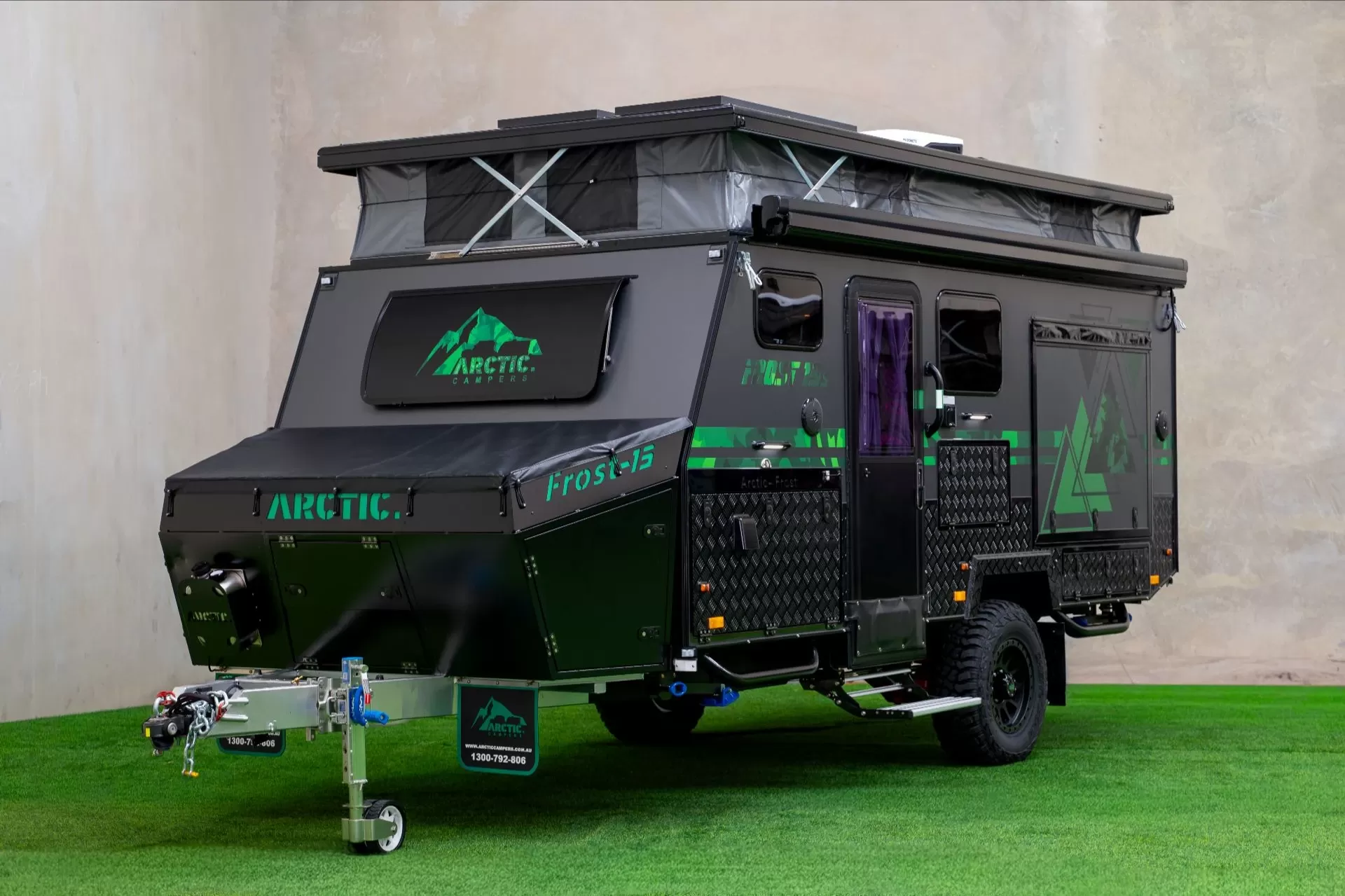
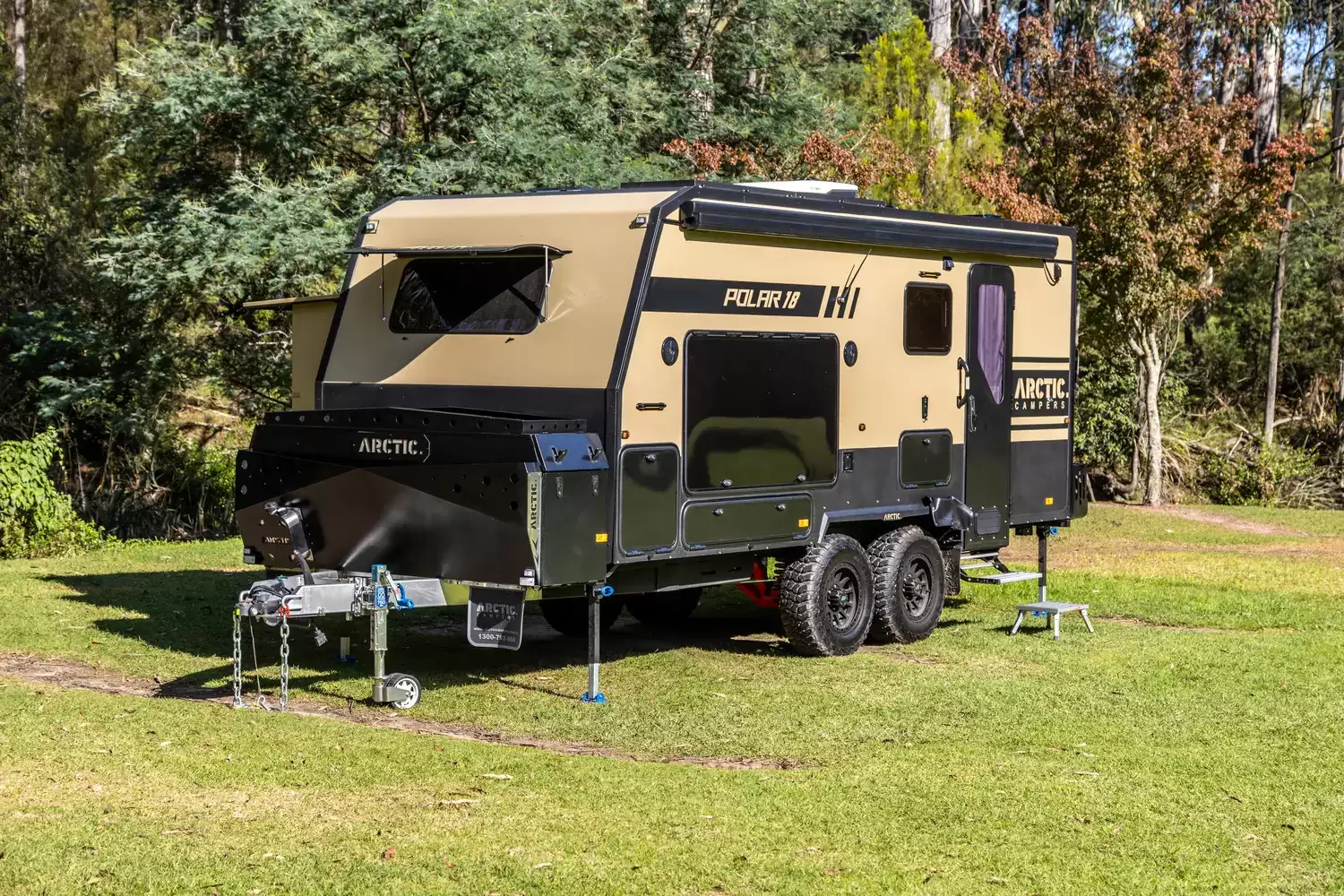
Will a pop top caravan fit in your garage?
Measure the van and the opening, not just the garage ceiling
Ceiling height is rarely the problem. The limiting point is usually lower and easy to miss. A roller door drum hangs below the header. A panel door sits across the opening when it’s up. Door tracks, the opener motor, light fittings, storage shelves and a sloping driveway that tips the van as it rolls in can all catch a roof that looked like it would clear.
Measure the lowest point along the van’s entire path into storage, with the door fully open. Then compare that figure with the van’s closed travelling height. That means the height including everything fitted to the roof, such as solar panels, hatches, an air conditioner and antennas, not just the body. Leave a sensible clearance margin. Tyre pressures, load and suspension all change how high a van sits, so a fit that works on paper with almost no gap can fail in the driveway.
Height is only one dimension to check
- Width at the door opening, allowing for awning brackets, side-mounted gear and the tow vehicle’s mirrors
- Overall length, including the drawbar, front box and any rear wheel carrier
- Room to reverse in on an angle, lower the jockey wheel and walk around the van once it’s parked
A van that clears the door can still be a nightmare to park. And a pop top, or a compact floorplan, doesn’t guarantee a garage fit. Confirm the dimensions for the exact model and configuration you’re considering before you commit.
What changes on the road?
Towing profile, weight and tight tracks
With the roof down, a pop top presents a smaller frontal area than a comparable fixed-roof van. Less area pushing against the air can reduce wind resistance, particularly at highway speeds and into a headwind. How much difference you notice comes down to the tow vehicle, the van’s shape and the conditions on the day, so treat it as a possible benefit rather than a set fuel saving.
Height and weight are separate things. A pop top isn’t automatically lighter. Lifting mechanisms, roof construction, layout, water tanks and accessories all affect the final figures. Choose by the numbers rather than the roof type. Check the loaded van’s weight against your vehicle’s towing capacity, and confirm the towball download sits within your vehicle’s limits. A trip to a weighbridge with the van packed for a real trip gives you figures you can trust.
Lower travelling height helps under overhanging branches on bush tracks and through low entries at stations, service areas and some campgrounds. It won’t make an unsuitable track suitable, though. Ground clearance, departure angle, width and the driving conditions matter just as much.
What changes when you pull up for the night?
Setup, comfort and upkeep
With a hard top, you unlock the door and walk in. A pop top needs unlatching, raising and securing at every stop, then lowering and latching before you leave. That’s a small job at a week-long camp. It becomes a bigger one when you’re doing one-night stays up the coast. Think about the effort of lifting the roof and your own mobility. Some Arctic models list an electric opening roof as an option, which takes the physical lifting out of it.
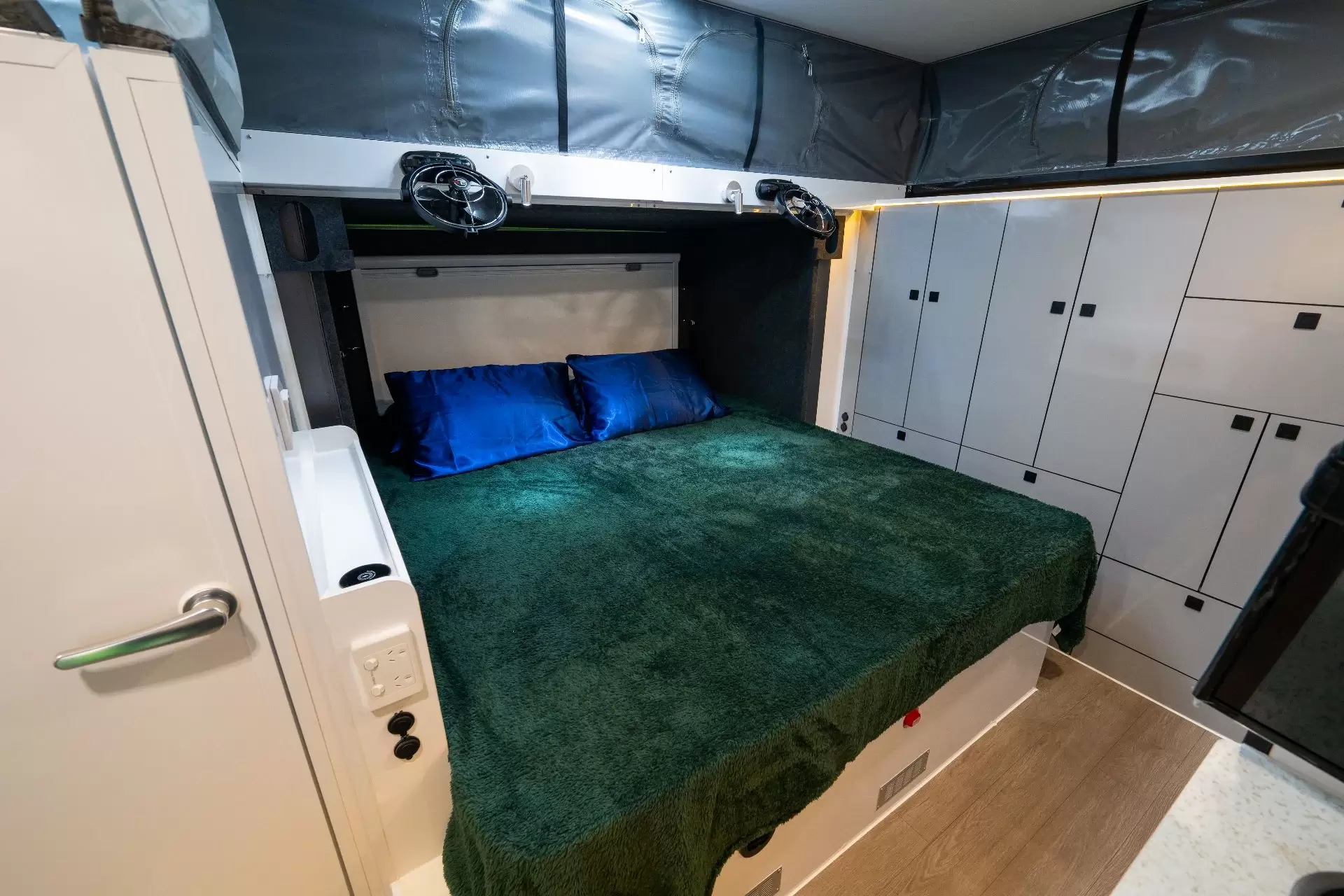
Pop-top surrounds let air through, which is welcome on a humid night. But flexible materials and seals need more attention in heavy rain, strong wind and temperature extremes. Pack a damp surround away for days and you risk mould.
A hard top appeals for cold camps, noisy caravan parks and extended stays, where solid walls help hold warmth and dampen sound. Actual comfort still comes down to the complete van, including wall construction, window glazing, heating and ventilation.
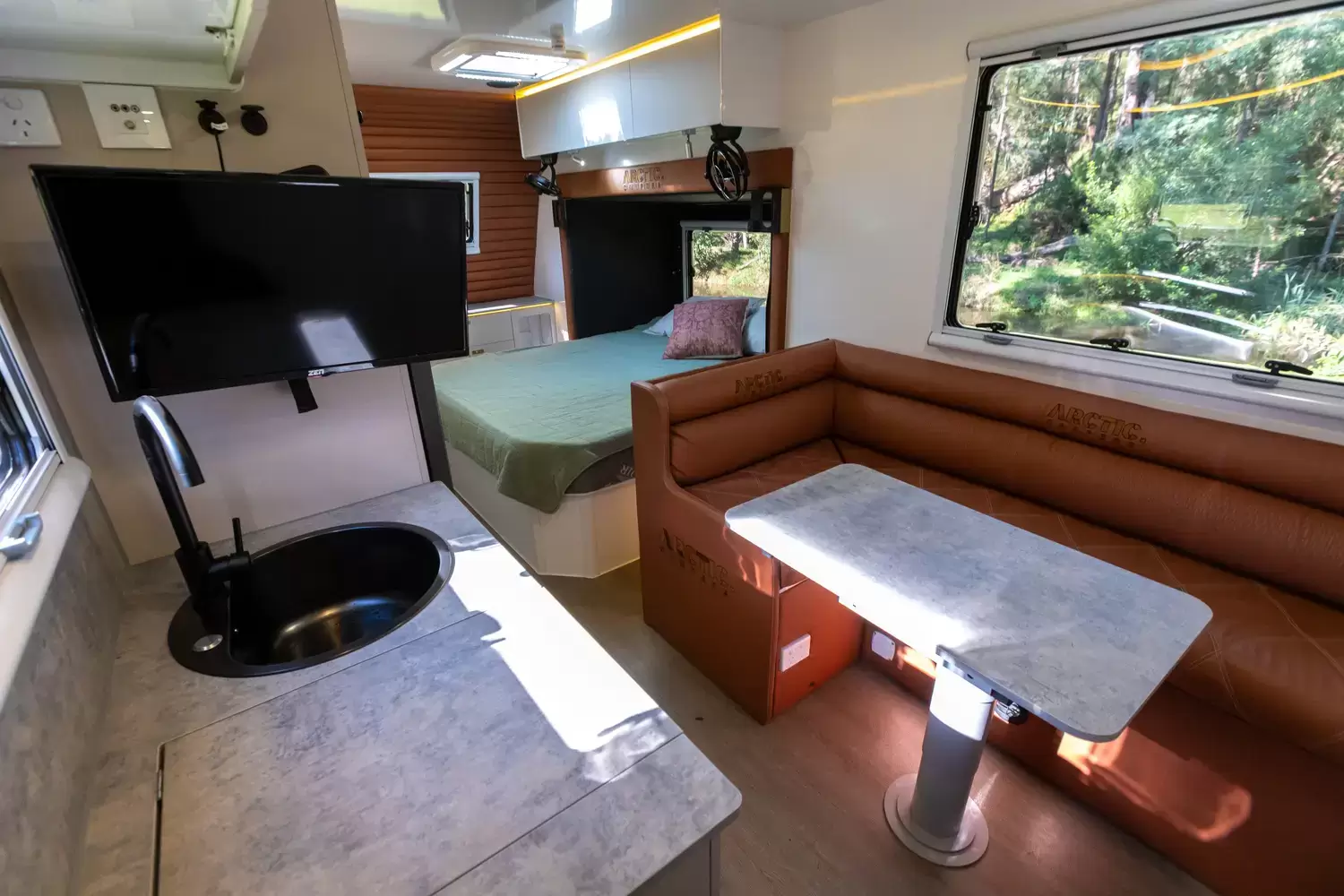
Overhead storage is worth checking in person. Some pop-top layouts trade away overhead cupboards, and access with the roof down varies. That matters when you want lunch from the fridge at a roadside stop without raising anything.
Both roofs need care. On a pop top, inspect seals, lifting components and flexible surrounds regularly. A fixed roof still needs its sealant, hatches and fittings checked, so don’t assume it’s maintenance-free.
How does the choice look across Arctic Campers’ range?
Arctic Campers’ current default hard top models are the Polar 15, Polar 18 and Summit 16. Most of the wider range is built as pop tops as standard.
That isn’t a fixed rule. Arctic has built other models with hard tops at customers’ request. If you go down that path, confirm the configuration and the resulting dimensions for your specific build, because a roof change affects closed height and your garage calculations.
The roof is one decision among several. Couples and families should compare floorplans, sleeping space, bathroom setup and off-grid needs alongside storage height. The best van for a family of four chasing remote tracks won’t look the same as one for a couple working on the road. If you have a preferred roof and layout in mind, the custom design service is the place to discuss it, keeping in mind that not every option suits every model.
Which roof fits your adventure?
| Factor | Pop top | Hard top |
|---|---|---|
| Travelling height | Lower with the roof closed | Full height at all times |
| Standing room on arrival | After the roof is raised | Immediate |
| Setup at each stop | Raise, secure and later lower the roof | No roof setup |
| Ventilation | Roof surrounds let air through | Relies on windows, hatches and fans |
| Weather and noise | Surrounds and seals need more attention | Solid walls suit cold or noisy camps |
| Overhead storage | Varies by layout, check with the roof down | Varies by layout, but generally offers more |
Lean towards a pop top when your measured home-storage clearance is the deciding factor and a lower travelling profile matters on the tracks you plan to drive. Lean towards a hard top when quick access, fixed-height living space and fewer setup steps matter most.
Still torn? Compare the actual vans, not the categories. Put their closed heights, loaded weights, roof operation and comfort features side by side, then test them against the trips you’ll take most often. A weekend beach run and a three-month lap of Australia can point to different answers.
The right choice is the van that works both at home and at camp. A long list of generic advantages counts for nothing if the van won’t fit your garage or wears you out at every stop.
Frequently asked questions
Are pop top caravans easier to tow?
A pop top’s lower profile can reduce wind resistance, which some owners notice at highway speeds or in crosswinds. Towing ease also comes down to loaded weight, how well the van matches your vehicle, the van’s dimensions, and wind and road conditions. And don’t assume a pop top is lightweight. Always check the weights of the specific van.
What are the downsides of using a pop-up camper?
A pop top caravan and a pop-up camper aren’t the same setup. Pop-up campers typically fold out further and rely more on canvas. A pop top caravan keeps solid lower walls and a rigid roof that lifts on a flexible surround. For pop tops, the trade-offs are raising and securing the roof at each stop, caring for the surrounds, and potentially less overhead storage or insulation, depending on the design.
Is a pop top roof worth it?
It’s worth the most when its measured closed height solves a real garage or carport problem. Keeping the van at home saves on storage and makes it easier to prepare for trips. Weigh that benefit against the setup effort and how you’ll use the van. For frequent overnight stops or long stays in cold weather, a hard top might be the better fit. You can compare both styles across our range, including the hard top Polar and Summit models.